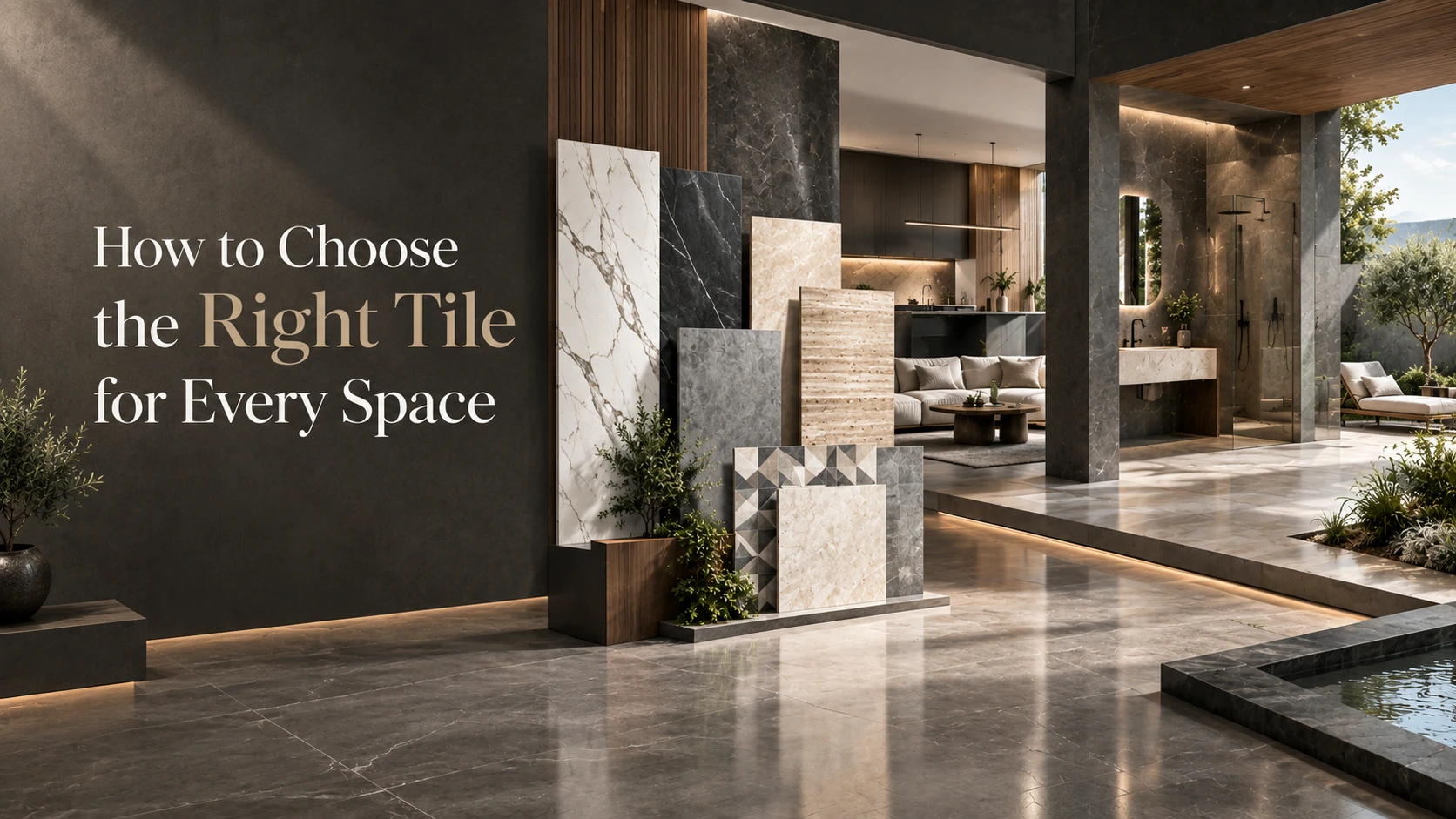
Choosing the right tile is an important part of designing a successful interior or architectural environment. Tiles influence the appearance of walls and floors, interact with lighting, complement furniture and fixtures, and contribute to the overall atmosphere.
With so many colours, patterns, finishes, textures, sizes, and material expressions available, selecting the right surface requires more than choosing what looks attractive in isolation.
The first step is to understand the purpose of the space. A residential living room, kitchen, bathroom, commercial environment, hospitality project, and exterior area each have different requirements.
Define the Desired Design Direction
Before exploring tile collections, determine the overall character you want to create.
Ask yourself:
- Should the space feel warm and natural?
- Is the desired look modern and minimal?
- Should the interior feel elegant and refined?
- Is a bold statement surface required?
- Should the surface blend into the architecture?
- Should a particular wall or area become a focal point?
- Is visual continuity important across multiple rooms?
These questions help narrow the selection and prevent the design from becoming visually disconnected.
Consider Function Alongside Appearance
A tile may look ideal, but its suitability for the intended application should also be considered. The surface needs to work with the environment and the way the space will be used.
Consider factors such as:
- Intended location.
- Type of application.
- Level of everyday use.
- Desired finish.
- Overall design concept.
- Relationship with surrounding materials.
- Required tile size and format.
Design and functionality should work together rather than being treated as separate decisions.
Choosing Between Matt and Glossy Finishes
Finish is one of the first characteristics people notice when viewing a tile. Matt and glossy surfaces can create distinctly different visual experiences.
| Finish | General Appearance | Design Use |
|---|---|---|
| Matt | Soft, subtle | Contemporary interiors |
| Glossy | Bright, reflective | Polished interiors |
| Carving | Dimensional | Feature walls |
| Textured | Tactile | Statement areas |
The right choice depends on the atmosphere, lighting, architecture, and application.
When to Consider Matt Tiles
Matt surfaces can be ideal when the objective is understated sophistication. They can work particularly well with neutral palettes, natural-inspired materials, minimalist architecture, and contemporary interiors.
Because the surface has a softer visual presence, it can provide a calm backdrop for furniture, lighting, artwork, and other interior elements.
Matt surfaces can also be combined with more expressive materials to create contrast without making the room feel visually overloaded.
When Glossy Surfaces Can Make an Impact
Glossy tiles have a polished appearance and interact strongly with surrounding light. They can be used to introduce brightness and visual refinement.
Depending on the design, glossy surfaces can be applied across larger areas or used selectively to highlight specific architectural elements.
The surrounding lighting should always be considered because reflections can significantly affect the appearance of a glossy surface.
Use Texture to Create a Focal Point
Texture is an effective way to make a surface visually distinctive. Rather than relying solely on colour, textured tiles introduce depth and dimension.
Carved surfaces can create patterns that respond to light and shadow. This can make a feature wall appear different depending on the time of day and lighting conditions.
Textured surfaces can work particularly well in:
- Living-room feature walls.
- Entrance areas.
- Reception spaces.
- Hospitality interiors.
- Decorative walls.
- Contemporary commercial environments.
Selecting the Right Tile Size
Tile size can affect the visual perception of a room. Large-format tiles can create a clean and expansive appearance, while other formats can introduce more visual rhythm.
A basic comparison can help during the planning stage:
| Format | Visual Direction |
|---|---|
| Large | Clean and expansive |
| Medium | Balanced and adaptable |
| Small | Detailed and rhythmic |
The actual selection should also consider the dimensions of the space, layout, installation requirements, and architectural design.
Think About Room Proportions
The size and shape of a room should influence tile selection. A large-format surface may complement a spacious contemporary room, while a more detailed format can work well when the design calls for greater visual rhythm.
The goal is to establish proportion between the surface and the architecture.
Create a Cohesive Colour Palette
Colour should never be selected without considering the surrounding environment. Floors, walls, cabinetry, furniture, lighting, doors, fixtures, and decorative elements all contribute to the final visual result.
A cohesive palette can include:
- A primary surface colour.
- A complementary secondary tone.
- A feature or accent surface.
- Supporting materials such as wood or metal.
This approach allows the space to feel intentional rather than assembled from unrelated elements.
Neutral Surfaces for Long-Term Flexibility
Neutral colours can provide a versatile foundation. They can adapt to changing furniture, artwork, accessories, and décor.
Light neutral surfaces may contribute to an open and airy visual character, while deeper neutral shades can introduce contrast and depth.
Neutral does not have to mean plain. Texture, veining, subtle patterns, and material-inspired details can provide visual interest without relying on strong colours.
Explore Stone-Inspired Surfaces
Stone-inspired surfaces can introduce a natural architectural character into modern interiors. They can work well in spaces where designers want material depth without moving away from contemporary aesthetics.
Stone references can complement wood, metal, glass, and neutral furnishings, making them versatile for different interior styles.
Marble-Inspired Surfaces for Refined Interiors
Marble-inspired surfaces are often associated with elegance and sophistication. Their patterns and veining can become an important visual element within an interior.
They can be used to create:
- Elegant living areas.
- Refined bathroom interiors.
- Feature walls.
- Sophisticated commercial spaces.
- Hospitality environments.
The surrounding materials should be selected carefully so the overall composition remains balanced.
Concrete-Inspired Surfaces for Contemporary Design
Concrete-inspired surfaces can complement minimalist and contemporary architecture. Their restrained appearance can provide a neutral background for stronger architectural forms, furniture, and decorative elements.
They can also be combined with wood and metal to create contrast between warm and industrial material references.
Consider the Kitchen as a Design Environment
Kitchen surfaces need to contribute to both the visual and functional character of the space. Wall and backsplash surfaces can complement cabinetry, countertops, flooring, and appliances.
A restrained surface can allow cabinetry to become the focal point, while an expressive tile can make the backsplash or feature wall the centre of attention.
Creating Refined Bathroom Spaces
Bathrooms offer an opportunity to experiment with texture, finish, colour, and material expression.
A coordinated surface palette can create a spa-inspired atmosphere, while contrasting wall and floor surfaces can establish visual hierarchy.
Consider using:
- Subtle neutral surfaces for a calm atmosphere.
- Marble-inspired patterns for elegance.
- Textured surfaces for feature areas.
- Coordinated formats for visual continuity.
- Contrasting surfaces to define specific zones.
Selecting Tiles for Living Areas
Living rooms often serve as the visual centre of a home. Surfaces should therefore complement furniture, lighting, wall treatments, and architectural features.
A sophisticated floor can create continuity across the room, while a textured or carved feature wall can provide a stronger focal point.
Surfaces for Commercial Environments
Commercial spaces often need to communicate a clear visual identity. The right surface can contribute to the atmosphere of an office, showroom, restaurant, retail space, or hospitality environment.
The selection should consider both the desired appearance and the demands of the intended application.
Think About the Complete Material Palette
Tiles should not be viewed independently. Before finalising a surface, consider how it interacts with the other materials in the space.
| Material | Relationship With Tile |
|---|---|
| Wood | Adds warmth |
| Metal | Creates contrast |
| Glass | Supports a clean modern look |
| Stone | Enhances natural character |
| Fabric | Softens hard surfaces |
Combining materials thoughtfully can create a richer architectural experience.
Always View Samples in the Actual Lighting
A tile can appear different on a screen, in a showroom, and inside the final space. Lighting conditions influence colour, texture, reflection, and perceived depth.
Where possible, view samples in the environment where they will be installed. Consider both natural daylight and artificial lighting before making the final selection.
Avoid Choosing Too Many Competing Surfaces
One common design challenge is using too many visually strong materials in the same space.
If the floor has a strong pattern, the walls may benefit from a more restrained surface. If a feature wall is highly expressive, surrounding materials can provide balance.
A simple design principle is to establish a hierarchy:
- One primary surface.
- One complementary surface.
- One optional feature surface.
- Supporting materials and décor.
Create Continuity Between Rooms
Using related surfaces throughout a home can make the overall design feel more cohesive.
This does not mean every room needs identical tiles. Instead, use complementary colours, textures, finishes, or material references to create a visual connection.
Consider Interior and Exterior Requirements
Exterior architectural surfaces require a different level of consideration from interior applications. The surface should be selected according to the intended environment and project requirements.
At the same time, exterior materials can be coordinated with interior surfaces to create a consistent architectural identity.
Build a Tile Selection Checklist
Before making a final decision, review the following:
- Application and location.
- Desired visual style.
- Tile size.
- Surface finish.
- Colour palette.
- Texture and pattern.
- Lighting conditions.
- Surrounding materials.
- Overall architectural concept.
- Practical requirements of the space.
Explore the Vastello Collection
Vastello brings together thoughtfully designed surfaces for contemporary architectural environments. The collections explore different colours, patterns, finishes, sizes, textures, and material expressions.
From sophisticated interior surfaces to solutions for broader architectural applications, the goal is to provide designers and homeowners with flexibility when shaping their spaces.
Make the Surface Part of the Design
The right tile should not feel like an afterthought. It should work with the architecture, lighting, furniture, materials, and purpose of the space.
By considering design and functionality together, it becomes possible to create interiors and architectural environments that feel cohesive, refined, and purposeful.
Find the Surface That Fits Your Vision
Every project has its own character. The right tile is the one that supports that character while meeting the requirements of the environment.
With thoughtfully curated collections and a wide range of surface expressions, Vastello helps architects, designers, and homeowners explore possibilities and create spaces that reflect their individual vision.