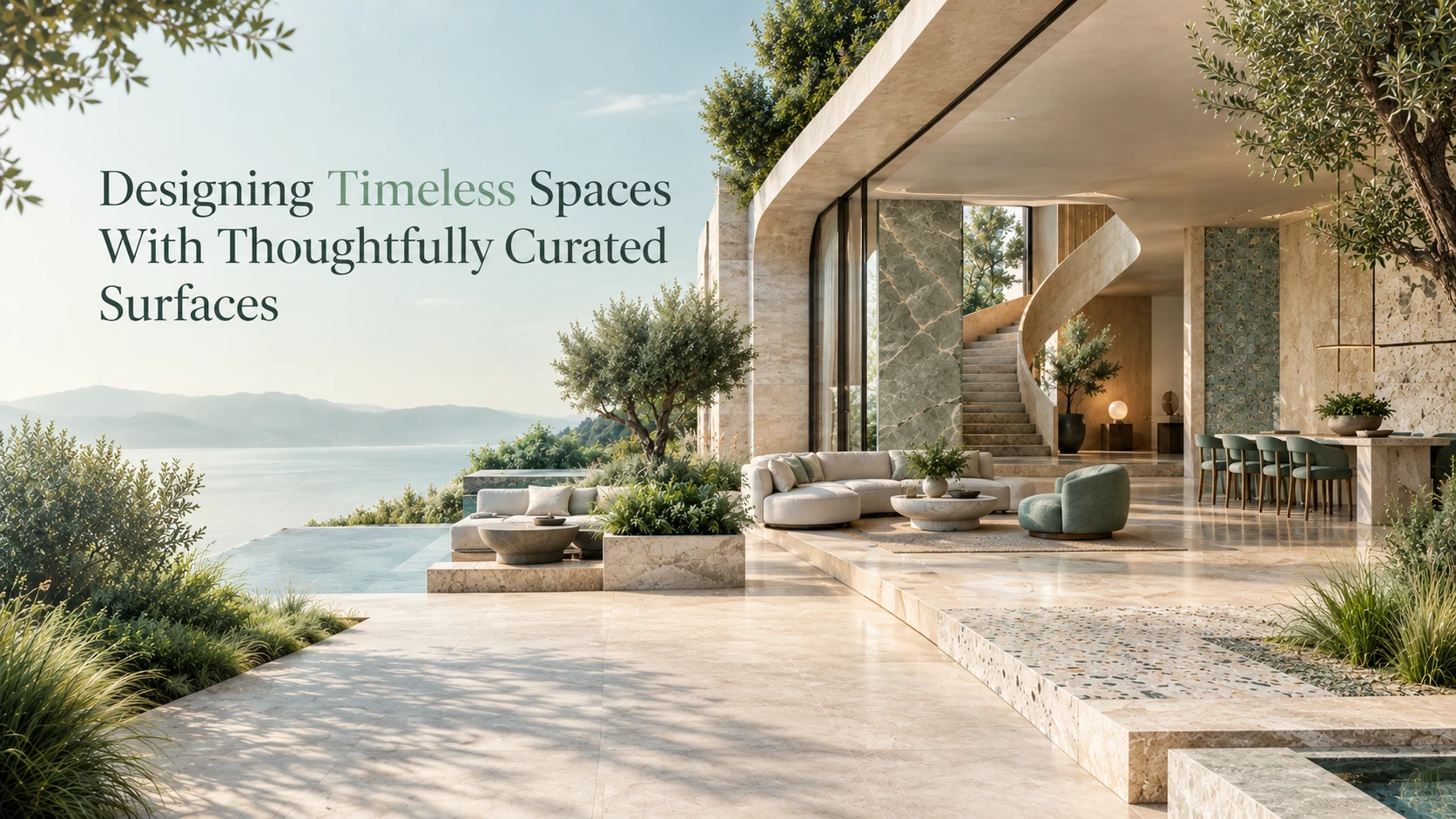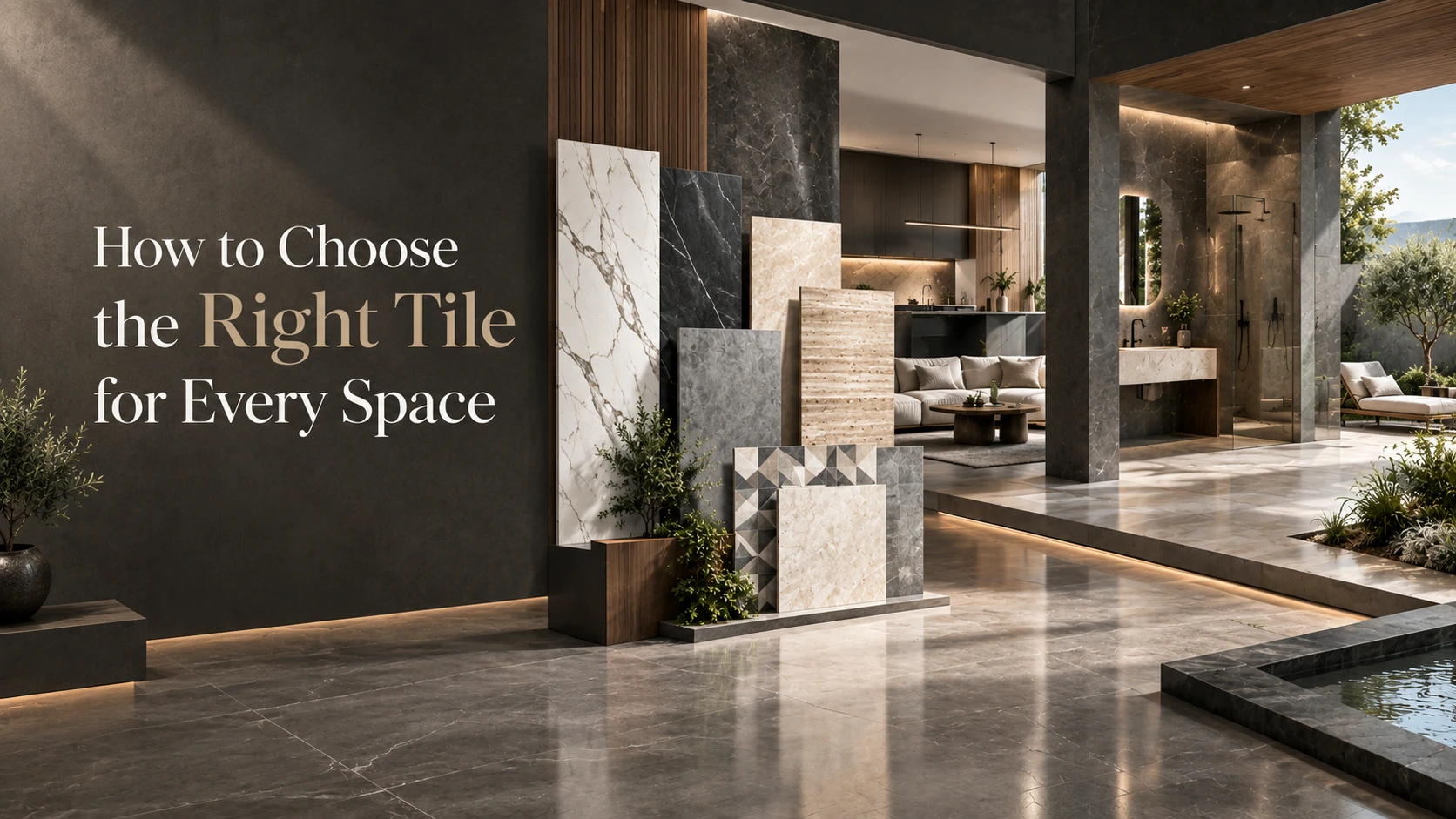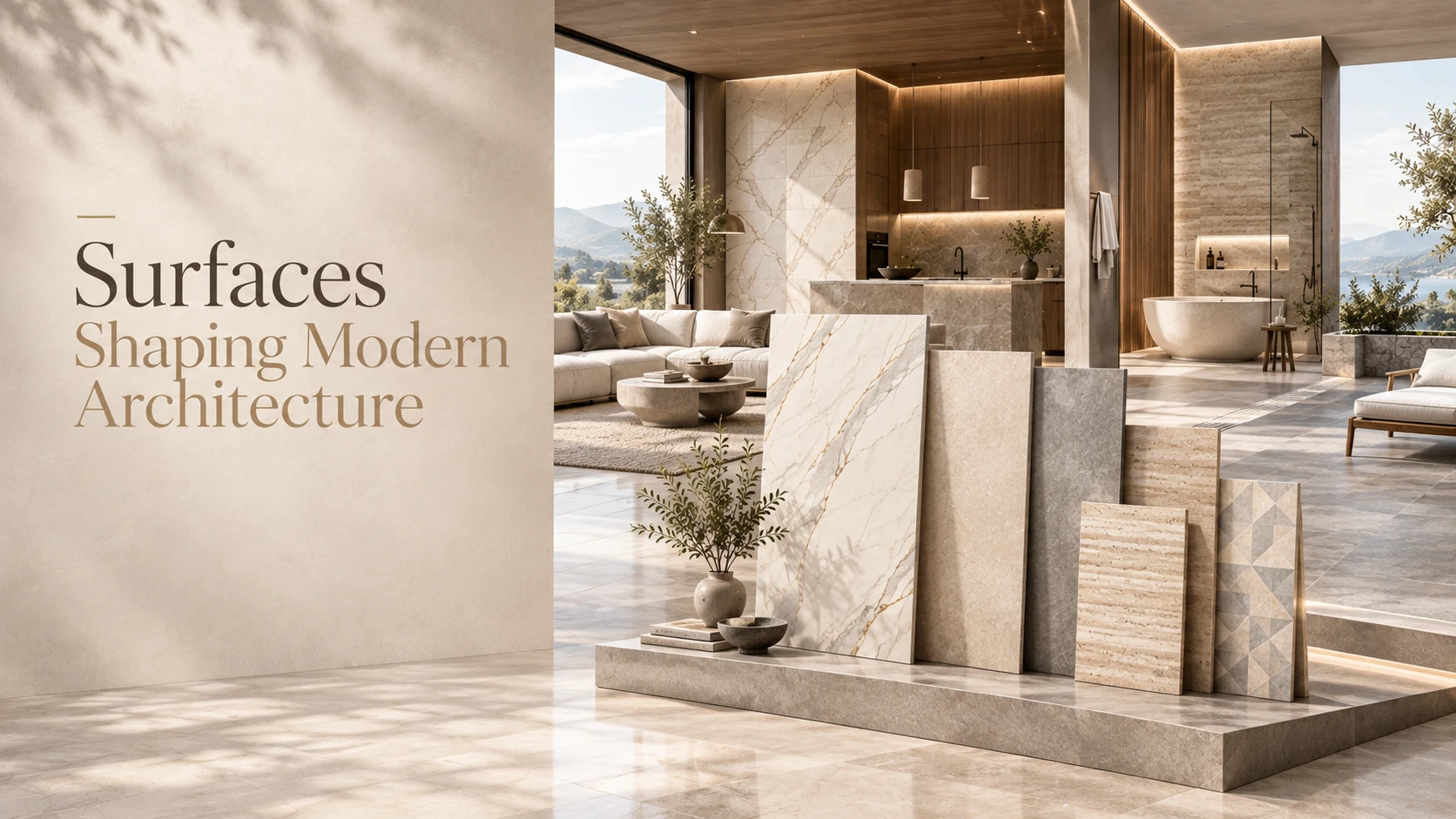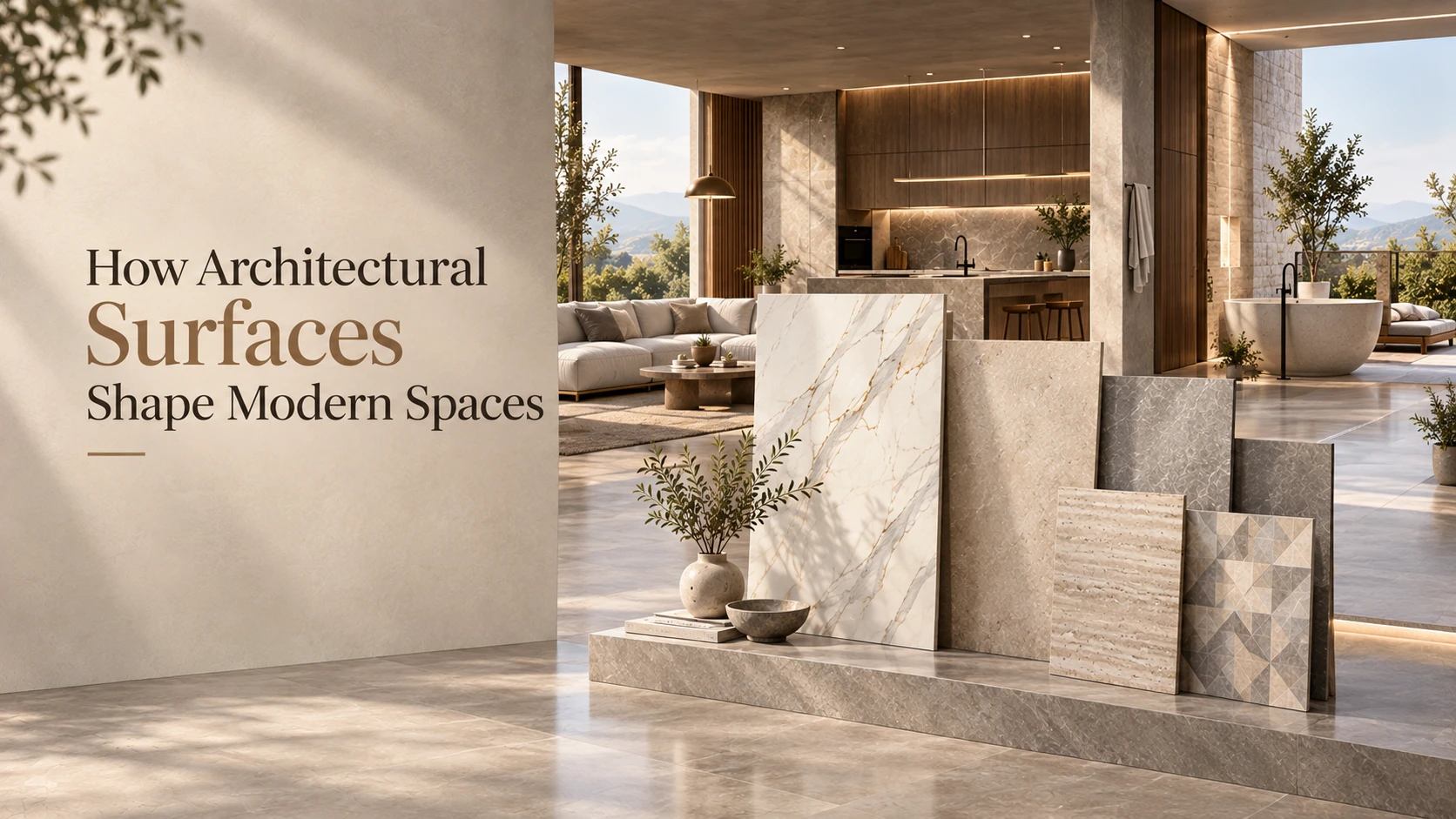
Architecture is defined by many elements — structure, proportion, light, furniture, colour, and materials. Among these, surfaces play a particularly important role because they occupy a large visual area and directly influence how a space is experienced. Floors, walls, façades, kitchen surfaces, bathroom walls, and feature areas all contribute to the overall character of a building.
At Vastello, we believe surfaces are more than finishes — they define the character of architecture. A thoughtfully selected tile can complement architectural forms, introduce texture, create visual continuity, and establish a distinctive atmosphere. The objective is not simply to select a material that completes a project, but to choose a surface that becomes an integral part of the design.
Modern architectural surfaces bring together aesthetics and functionality. They allow architects, interior designers, and homeowners to explore different material expressions while creating environments that are practical for everyday use.
Why Surfaces Matter in Architecture
The surface of a space is often one of the first things people notice. Its colour, texture, finish, pattern, and scale can influence the visual perception of the entire environment.
A carefully selected surface can:
- Establish the visual identity of a room.
- Complement architectural forms and proportions.
- Create contrast between different areas.
- Introduce texture and material depth.
- Influence how natural and artificial light is perceived.
- Connect different areas through a consistent material palette.
- Create feature walls and statement surfaces.
- Support both residential and commercial design concepts.
This makes surface selection an important design decision rather than a final decorative step.
The Relationship Between Light and Surface
Light and surface work together continuously. The same tile can appear different depending on whether it is exposed to direct sunlight, soft daylight, or artificial illumination.
Glossy surfaces can reflect light and create a polished appearance. Matt surfaces generally provide a softer visual character, while textured and carved surfaces can create highlights and shadows across the material.
Architects and designers can use this relationship intentionally. A textured wall positioned near natural light, for example, can reveal subtle patterns throughout the day. Similarly, a carefully selected glossy surface can help create a brighter visual environment.
Understanding Different Surface Finishes
The finish of a tile can dramatically influence the personality of a space. Different finishes provide different levels of visual expression and can be selected according to the architectural concept.
| Finish | Visual Character | Suitable Design Direction |
|---|---|---|
| Matt | Soft and understated | Contemporary, minimal |
| Glossy | Polished and reflective | Refined, elegant |
| Carving | Textured and dimensional | Feature areas |
| Textured | Tactile and expressive | Statement interiors |
The choice should always consider the intended application, lighting, surrounding materials, and overall design language.
Matt Surfaces for Understated Elegance
Matt surfaces can create a calm and sophisticated atmosphere. Their low-reflective appearance works particularly well with contemporary architecture where simplicity and material expression are important.
Neutral matt surfaces can provide a subtle foundation for furniture, artwork, lighting, and architectural details. They can also work effectively when the goal is to create a refined interior without making the surface excessively dominant.
Glossy Surfaces for a Refined Appearance
Glossy surfaces create a more reflective visual experience. They interact strongly with light and can contribute to an elegant and polished appearance.
When used thoughtfully, glossy tiles can become an important part of a room’s visual composition. They can be introduced as complete wall or floor surfaces or used selectively in areas where a stronger visual highlight is desired.
Texture and Carving Add Dimension
Texture introduces another layer of architectural expression. Instead of relying only on colour or pattern, textured surfaces create physical and visual depth.
Carved surfaces can be particularly effective in feature areas because the interaction between light and shadow makes the pattern more noticeable. They can transform an otherwise simple wall into an architectural focal point.
Textured surfaces can be considered for:
- Feature walls.
- Reception areas.
- Hospitality interiors.
- Living-room statement areas.
- Decorative walls.
- Contemporary commercial spaces.
- Selected exterior architectural applications.
The Importance of Tile Size
Tile size can influence the perceived scale and proportion of a space. Large-format tiles can create a visually continuous appearance, while smaller formats can introduce rhythm and pattern.
Large surfaces are often associated with contemporary architecture because they can reduce visual interruptions and create a clean appearance. However, the ideal format depends on the dimensions and requirements of the project.
| Tile Format | Possible Visual Effect |
|---|---|
| Large format | Expansive and seamless appearance |
| Medium format | Balanced and versatile |
| Smaller format | More rhythm and visual detail |
Tile size should therefore be considered together with room dimensions, furniture placement, architectural layout, and installation requirements.
Creating Continuity Across Spaces
One of the strongest ways to create a cohesive architectural environment is to coordinate surfaces across different areas.
A home, for example, may use complementary surface expressions across:
- Living areas.
- Kitchens.
- Bathrooms.
- Corridors.
- Entrances.
- Outdoor spaces.
The materials do not necessarily need to be identical. Similar tones, textures, or design references can create a connection while allowing each space to maintain its own identity.
Surfaces for Residential Architecture
Residential spaces need to balance personal expression with everyday functionality. Homeowners increasingly want interiors that feel distinctive while remaining timeless.
Living rooms can benefit from sophisticated stone-inspired or contemporary surfaces. Kitchens can combine practical requirements with carefully selected backsplashes and wall finishes. Bathrooms can use texture, colour, and finish to create a refined atmosphere.
The surface becomes part of the everyday experience of the home, making its visual character and practical suitability equally important.
Surfaces for Commercial and Hospitality Spaces
Commercial environments often use materials to establish identity. Offices, retail spaces, restaurants, hotels, and other public environments can use surfaces to create memorable architectural experiences.
In hospitality design, materials can influence how visitors perceive an environment from the moment they enter. A reception wall, restaurant backdrop, corridor, or feature area can become a visual signature through carefully selected surfaces.
Connecting Interior and Exterior Design
Modern architecture often considers indoor and outdoor areas as connected environments. Surface selection can help strengthen this relationship.
Exterior surfaces can complement interior materials through similar colours, textures, or material references. This can create a more unified architectural language from the entrance to the interior and toward outdoor areas.
Choosing a Surface Based on the Design Objective
Before selecting a tile, it is useful to define what the surface is expected to achieve.
Consider whether the goal is to:
- Create a calm and minimal atmosphere.
- Introduce luxury and refinement.
- Add texture and depth.
- Create a statement wall.
- Make an area appear visually expansive.
- Connect multiple spaces.
- Complement natural materials.
- Create contrast within a neutral interior.
Having a clear design objective makes the selection process more focused.
Material Expression for Modern Architecture
Modern tile collections increasingly explore interpretations of natural and architectural materials. Stone, marble, concrete, and natural-inspired surfaces allow designers to introduce familiar material characteristics into contemporary environments.
These surfaces can be combined with furniture, wood, metal, glass, and other architectural materials to create layered interiors.
Designing With Timelessness in Mind
Trends can provide inspiration, but architectural spaces are intended to remain relevant for years. Timeless surface design is therefore about balancing contemporary aesthetics with materials and colours that can continue to work as the surrounding environment evolves.
A carefully selected neutral surface can remain adaptable as furniture and décor change. More expressive surfaces can be used selectively where they are intended to create a specific focal point.
The Vastello Approach
Vastello focuses on thoughtfully curated collections that bring together contemporary aesthetics, material expression, quality, functionality, and versatility.
The collections are intended for architects, designers, homeowners, commercial environments, hospitality projects, and other architectural applications.
By exploring different sizes, finishes, textures, colours, patterns, and material expressions, designers can find surfaces that support the unique character of each project.
Creating Spaces That Shape Experiences
A successful space is not created by architecture alone. Materials contribute to how people see, move through, and experience an environment.
The right surface can provide continuity, create contrast, introduce texture, reflect light, and establish atmosphere. It can become a quiet foundation or a defining architectural feature.
Surfaces That Become Part of the Story
Every architectural space has a story shaped by its materials, forms, colours, and details. Surfaces provide one of the most visible ways to express that story.
At Vastello, the focus is on creating thoughtfully designed surfaces that help architects, designers, and homeowners transform ideas into distinctive environments — spaces where contemporary design, material expression, and dependable performance come together.